The Theology of Productivism: Money as God, Work as Worship, and Rest as Crime

By Khusi Limbu 29 September 2025
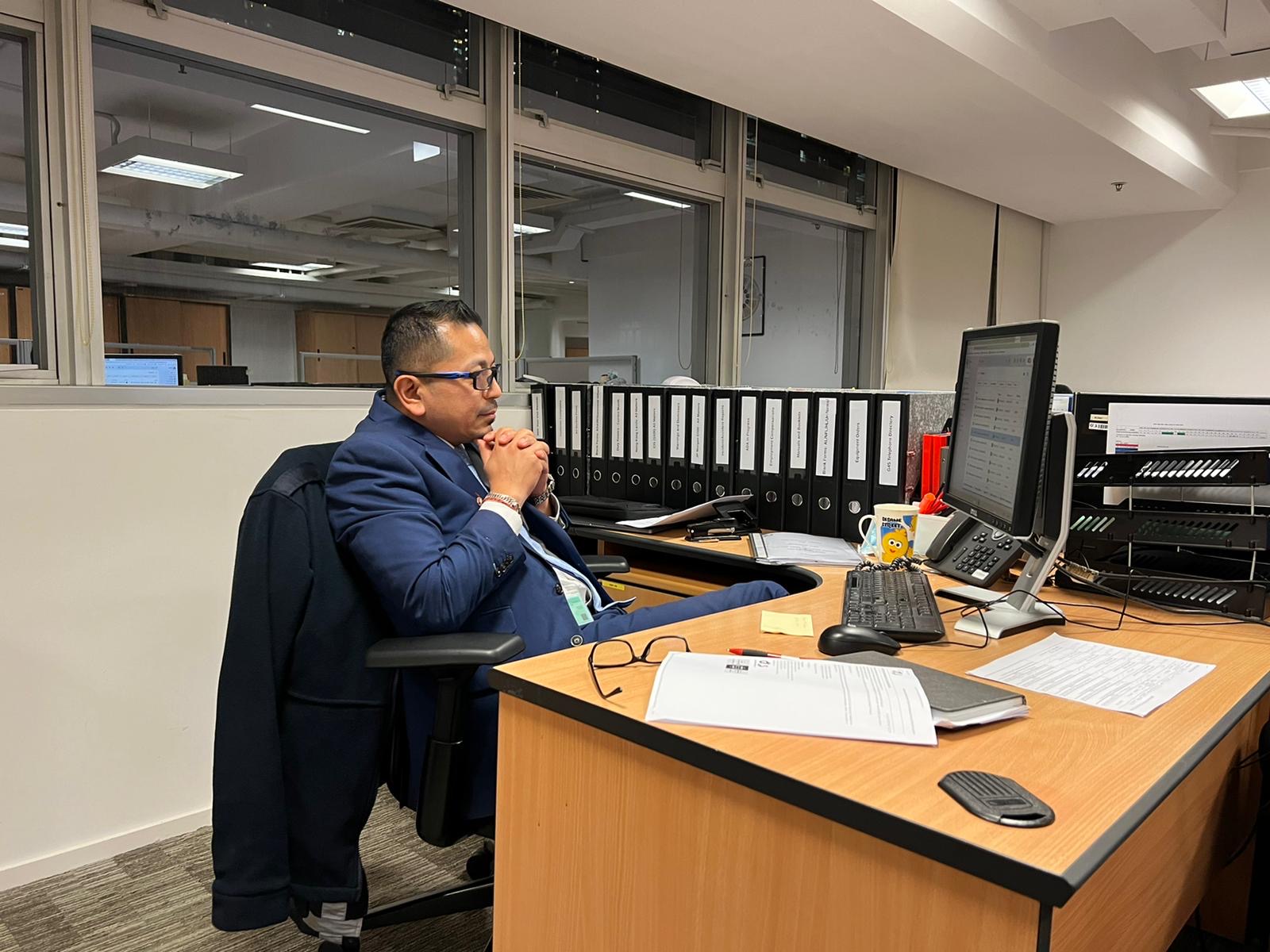
I wake up at the same time every day. I perform my morning ritual. The alarm clock rings at the identical moment. I always walk the same path. I catch the same train. I sit in the same chair. I do the same work. Exhausted and spent, I return home in the evening. On the same date every month, I receive my salary. From my income comes the same regular deductions — 'Tax', 'N.I.' (National Insurance), 'Private Pension', and 'Student Loan Payback', etc. If I do not fall ill, I receive the exact same salary every month. The day after receiving my pay, after settling all bills and dues, I am left with almost nothing. From the very day I am paid, I begin living in anticipation of the next 30 days. And so, this cycle continues.
This is my story. Yet, whether in Nepal or abroad, this is the representative story of all of us who work for a wage today. Is this not slavery? If not, what is it then? What is the difference between this story of ours and the slavery described in history? Today, I have shared a short article on this very subject. But let me clarify at the outset: 'Wage Slavery' is indeed a product of modernity, but it is not the same as 'Modern Slavery'. Karl Marx's concept of 'Wage Slavery', introduced as early as 1847, has been overshadowed lately by 'Modern Slavery'. 'Modern Slavery' refers to the 45 million victims of forced labour and human trafficking, whereas 'Wage Slavery' refers to the nearly 2 billion people worldwide who work for a salary. Yet, this is presented not as bondage but as a form of freedom. This article is the story of those two billion people.
Let us glance at the past for a moment. Up until our grandfather’s generation, 'work' meant creating something, using one's mind to build something with one's own hands. One had control over the objects created in the production process; emotion was invested in it, and one could even consume it oneself. In the village, the blacksmith forged iron, the stonemason built houses, the carpenter worked with wood, and the farmer ploughed the land. A relationship existed between the worker, his labour, his skill, and the produced goods from start to finish. Work provided an identity.
But today, all these original aspects have changed. Time, labour, and skill have been fragmented. Our expertise is under someone else's dominion. The industrial system has not only divided our work and creativity; it has fragmented human society—indeed, it has fragmented the individual human. Now, we no longer produce anything in full. We merely complete a tiny fragment of a process, which we can never fully comprehend. This is precisely what is meant by the Hindi word 'Algaav' [अलगाव] and what Karl Marx called 'Alienation' [एलियनेसन]. Now, we have become machines, alienated from our own will.
Yes, the current system, promising to make the individual independent, has stripped us of our freedom under the guise of paying a salary for self-reliance, merely by wringing out our labour. In the era of slavery, whips and chains were visible; today, in productivism, all those weapons remain invisible, but the price we pay is the same. This system has forced us to live believing in only one thing. It is called — 'Opportunity'.
Today, our labour produces goods and services, but there is no room for our own will or decision within that process. What we generally call 'happiness' today is not, in fact, true 'happiness'. Our salaried job today is merely a means constructed to avoid hunger, maintain an existence in society, and not become helpless before anyone, including the state. This has been normalised under the names of 'professionalism', 'responsibility', and 'expertise'. Subservience to others is called 'achievement', and the exploitation of our labour is presented as an opportunity. We are in a state where we have lost the essence of being human.
The salary we receive is modernity’s grand illusion of freedom. It convinces us that we are bargaining the value of our labour, but in reality, we are merely choosing which chain of slavery to wear in the labour market. This system has turned us into a commodity, renting out our time, labour, and freedom. We sell our freedom by fragmenting the most creative years of our lives into chunks of 8, 10, or 12 hours, solely to perform labour just to meet basic needs. But salary is not our "payment"; it is the 'price' of our existence. Just as a labourer cannot afford to buy a house and instead rents, so the capitalists, unable to purchase his life outright, give him temporary rent, which we call salary. Thus, just as a labourer must vacate a room upon failing to pay rent to the landlord, so the capitalist casts the labourer into the crowd of the unemployed when no longer needed. This condition of workers, who risk falling into the market of unemployment at any moment, has been termed "precarious work in neoliberalism" [प्रेकारियस वर्क इन नियोलिबरलिज्म] since the 1980s. Thus, we are not humans with 'inalienable rights' as stated in international human rights law, but rather temporary assets of capitalism.
Today, a tiny minority controls the vast share of productive assets, while the majority produced those very assets through a lifetime of labour. This is not a sudden occurrence, nor is it a law of nature. It is a system designed with a clear purpose, which maximises exploitation and forces us to survive on minimum wages.
The German theologian Dietrich Bonhoeffer [डाइट्रिख बोनहोफर] stated: “The ultimate test of a moral society is not whether its members strictly adhere to the prevailing system of values, but whether those values themselves are just and rational, and whether the society has the courage to dismantle itself if they are not” [कुनै पनि नैतिक व्यवस्थाको वास्तविक परीक्षा भनेको प्रचलित मूल्य-मान्यतालाई मात्र पछ्याउनु होइन, बरु त्यस मूल्य–मान्यता आफैं न्यायपूर्ण र विवेकशील छ कि छैन भनेर बुझ्नु र आवश्यकता परे आफूलाई समाप्त गर्न सक्नु नै वास्तविक नैतिकता हो]. In this context, the modern salary system has already failed the test. It binds people in an immoral and unjust manner, and its existence is based solely on the necessity of allowing people just enough breath to live and forcing them to work a lifetime.
The salaried system has created a monumental illusion regarding human life and social mobility. Once the core idea of 'Protestant Ethic' [प्रोटेस्टेन्ट एथिक] within Christianity—"Work hard, save money, and only then will you receive God's grace" [कडा परिश्रम गर, पैसा जम्मा गर, तब मात्र ईश्वरको कृपा पाइन्छ]—merged with the Industrial Revolution and the capitalist labour market, the modern morality of "My work is my worship, and worship is my work" [काम मेरा पूजा, पूजा ही मेरा काम] was established. This created an imperative for humans to labour for a lifetime, as if only continuous hard work and devotion to the master would bring success. But this is not the ladder of meritocracy; it is the artificial treadmill of a gym, where you feel you are running a great deal, but in reality, you always remain in the same place, selling your labour to the capitalist.
In today's capitalist economy, productivist and consumerist culture has distorted the very natural characteristics of humanity. Today, contemplating is considered laziness. Reflecting has become like a waste of time. Our leisure, education, and relationships are now weighed on the naked scales of efficiency and utility. Consequently, our aspirations are no longer our own. We are forced to want only what the production system dictates—a system that teaches us to desire exactly what it makes us produce. Questioning or querying the system has become akin to 'obstructing work'. Rest has now become synonymous with unproductiveness. Instead of living life, we have become solely concerned with managing it. To express this through an Urdu couplet:
"We are immersed in poison, yet we do not drink it; We are enduring life, yet we are not living it" [जहर मे डुबे हैं हम, पर पि नहीं रहें है / जिन्दगी को सह रहे है हम, पर जि नहीं रहे है]
The values of productivity, utility, and efficiency have erected a moral hierarchy within the individual and society today. Only visible and measurable materiality is considered a result and superiority. Foundational professions such as teachers, construction workers, caregivers, or artists are undervalued, while those who speculate on the stock market, creating no tangible object, earn millions—more than the farmer who feeds the world. Today, your value is not your humanity, but your material production. Every hour, every moment, every thought has been polluted and colonised by the values of productiveness. In this way, it is not the human within us, but only the machine that produces, that is valued.
The 'Wage Slavery' introduced by modernity extends far beyond your office and working hours today. Under the guise of 'Working from Home' and 'Working Online', you are compelled to be available twenty-four hours a day. Your employer acknowledges no time for you to eat, sleep, enjoy leisure, study, romance, or go to the gym. Even at midnight, a phone call regarding work may come from somewhere. Modern wage slavery has encroached upon your education, relationships, leisure, and even your death planning. Your entire life has been 'monetised'. This system has forced you to remain perpetually active. Even in free time, one is made busy, sometimes deeming even rest as unproductive. To study and contemplate in free time, to encounter the truth, to create authentically—which are necessary for insight, creativity, and contemplation—are themselves treated as crimes. Today, when exhausted, one must rest stealthily, fearing the attachment of social stigma. Because (unless you happen to be wealthy) resting in the sun, playing, or wandering makes you appear useless, lazy, or lacking in ambition. If you are in wage slavery, you have an identity; otherwise, you are nobody and nothing. Wage Slavery has become our mandatory identity. That is to say, true rest poses a threat to losing your identity.
Therefore, working excessively in wage slavery has become a form of addiction. This arrangement has turned work into a person's true identity and portrays not working for a salary as an existential crisis. Today’s labourers and employees are themselves constructing their own bondage. Choices made for pensions, loans, mortgages, competition, the greed for promotion, and social status bind them perpetually to this system. You may call this building a future, but in reality, it is a dungeon of an invisible prison whose lock you yourself are crafting.
Yet, if anyone happens to challenge this arrangement, they receive an immediate answer suppressed by emotional pressure—"At least, thank goodness, there is a job", "You have sustained life", "You have supported the family", "You have run the household". These words transform justifiable rage into gratitude, and the consciousness of injustice into feelings of one's own mistake and inferiority. In reality, thinking about your physical fatigue, mental anxiety, rest, and creativity is not your weakness. These are natural reactions to unnatural circumstances. But this system continues to teach acceptance of the exploitation of labour, always adding more to hard work, loyalty, and devotion.
In the modern system, freedom is merely an illusion. It is presented as a privilege, but one that must be earned, bought, or won. But the freedom that must be bought is not freedom; it is merely a temporary, conditional favour granted by those who possess true power. To survive, you must sell your labour. The opportunity for choice exists only within the boundaries of this system—the decision of which company exploits you, which loan to take, or which consumption to pursue. This is a choice without an exit.
Wage slavery is far more refined in form than ancient slavery because it can only be seen through experience and the inner mind, not by external physical eyes. In wage slavery, the exploited themselves defend their exploitation, and the necessity of selling labour to survive has been cloaked in the guise of freedom. Wage slavery has colonised our identity, imagination, and will. An ancient slave at least knew his condition and resisted. But the modern labourer-slave has been made labour-obedient.
In conclusion, true awakening begins when we start seeing our hidden keys and question the very structure of productivity. Freedom is being able to live without selling the liberty of one's life, taking back one's time for contemplation-reflection, relationships, and creation. Until this is achieved, there is no rationale in living in poverty until the age of 65 in the greed of a pension, saying, "I will enjoy life after turning forty" [चालीस कटेसी रमाउँला], and then living rich at the time of death.