Patriotism Endures, Even if the Nation Neglects its Diaspora

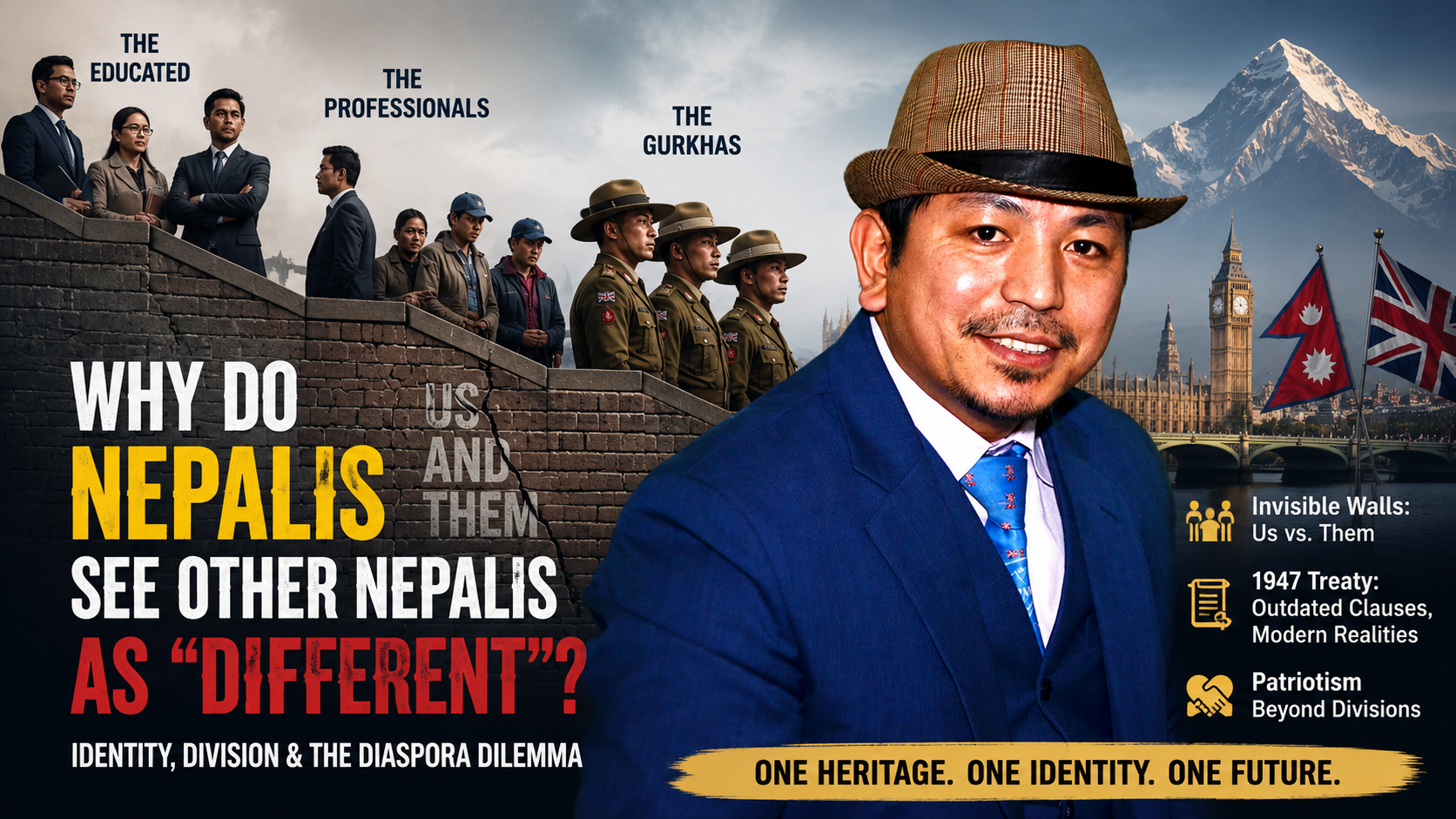
It is a curious psychological phenomenon within the Nepali diaspora: as soon as our economic status improves, we begin to categorise other Nepalis as "different." We have built invisible walls of "Us and Them":
- The "Educated": Who refuse to converse with those they deem "uneducated."
- The "Professionals": Who feel embarrassed to associate with those still struggling.
- The "Gurkhas": Who often view themselves as a class apart from the rest of the Nepali community.
Identity vs. Nationality
In many parts of the UK, we see "Gurkha Nepali Community" centres instead of a unified "Nepali Community." I have met many who proudly claim, "I am Gurkha," even filling out ethnic monitoring forms as such, while neglecting that Gurkha is an identity, but Nepali is a nationality. When one feels a sense of inferiority in calling themselves "Nepali," they often overcompensate by placing themselves on a pedestal above their own people.
The 1947 Tri-partiate Fallacy
We often cling to the 1947 Tripartite Treaty, which stated that Gurkhas would enlist and retire as Nepalis. At that time, no one imagined a future where thousands would retire and settle permanently in the UK. Today, we hold onto those outdated clauses like Laal Bujhakkads (know-it-alls), using them to justify divisions that no longer make sense in a modern British context.
The Bottom Line
Patriotism does not die, even when the motherland treats its Non-Resident Nepalis (NRNs) poorly. However, our strength is weakened by our own internal hierarchies. Until we stop seeing "different" kinds of Nepalis and start embracing our shared heritage without a sense of superiority or shame, we will remain a divided community in a foreign land.