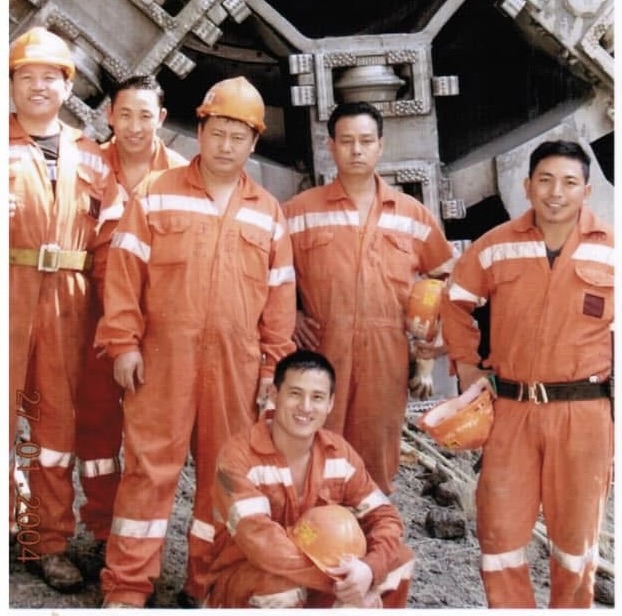
मजदूर दिवस : मनन् गर्ने कि मनोरन्जन गर्ने ?

As human civilisation has evolved to this point, many in history have endured immense struggle—efforts that most today dismiss as "nothing special." In English, we call this "taking things for granted." It means accepting achievements, rights, and successes as if they simply appeared out of thin air, without ever reflecting on the sacrifice behind them.
The Labour Rights we exercise today are the fruit of the resolve, thought, sacrifice, and contributions of those who came before us. However, a major problem for us labourers is that we often wait for others to raise their voices for us. Instead of reading relevant journals, reflecting, or seeking knowledge, we often spend our days lost in TikTok, Reels, and social gatherings. When this cycle of "feasting and fun" becomes excessive, the worker loses their edge and eventually becomes a burden to family and society. In his book Das Kapital, Karl Marx referred to such individuals as the "Lumpen Proletariat."
Our reality is a cycle of constant work. Our ancestors worked their whole lives without a moment to think for themselves. Today, we do the same, lacking the time to think for others. Tomorrow, our children will likely face the same fate. But do we ever ask, "Why must we work for generations without end?" We don't. We fail to see it because we look at a "small screen." To see the truth, we must look at the "Broader Picture." Yet, that broad view is blocked by a wall built right in front of us.
Because most workers (including high-level employees and directors who work for a salary) are preoccupied with earning money, history shows that the voices of the working class have often been raised by the wealthy, the educated, and humanitarians.
- Karl Marx was the son of a wealthy man.
- Engels’ father owned numerous factories in England.
- Thomas Hobbes, Prince Gautama Buddha, Mahavira Jain, Gandhi, and Ambedkar—all came from backgrounds of means or education, yet they fought for the justice and freedom of the poor.
They had to inform the labourers of their own condition because the workers were often too distracted by entertainment, internal conflicts, or "slavery to the master."
Today, the gap between the rich and the poor is more massive than ever. To put it simply: 92% of the world's wealth is held by just 2% of the population. To put it even more simply for our sisters: if there were 100 Sheerbandis (traditional headpieces) in the world, 92 of them are locked in the trunks of two wealthy people, just collecting interest. The remaining 98 people are left to fight over and share just 8 Sheerbandis.
Slavery has simply changed its form; it is no longer always visible, but it must be felt. Hard work alone will not improve the status of the labourer. We must all open our eyes. To see over that "wall," we must increase our "height." That height is reached through study, reflection, meditation, frugality, hard work, and unity.
On this World Labour Day, may every worker find the inspiration to reflect on the past and contemplate the future.